


Advertisement
Advertisement
Our habits are more than quirks we've developed over time — they're a direct path to how we feel. When we're overwhelmed and under pressure, how we deal with stress matters. "Destressing is the proactive, conscious process of identifying, challenging, and actively reversing the body's 'fight-or-flight' stress response," says Dr Karim J. Torres Sanchez, licensed clinical psychologist at LBee Health. "It is a targeted intervention aimed at reducing the presence and physiological effects of stress hormones and tension in the body and mind."
The ultimate goal is to shift the body's autonomic nervous system from its sympathetic state to its parasympathetic state — from feelings of stress to rest-and-digest mode. Here are six simple habits that mental health experts say can ease stress in just 10 minutes — or less.
1. Progressive Muscle Relaxation
Stress often lives in our bodies without us realising it. When you're feeling stressed, your first move should focus on relaxing your muscles.
"Sit or lie down and begin with your hands or feet," Dr Torres explains. "Tense a muscle group as tightly as you comfortably can for five seconds. Focus intensely on the feeling of tension. Then, suddenly and completely release the tension for 10 to 15 seconds, noticing the warm, heavy, relaxed feeling. Systematically move through all major muscle groups — hands, arms, face, neck, shoulders, chest, stomach, buttocks, legs, feet."
This practice alleviates physical stress and brings you back to centre — a reminder that you're grounded and dealing with your feelings.
2. 10-Minute Walk in Nature
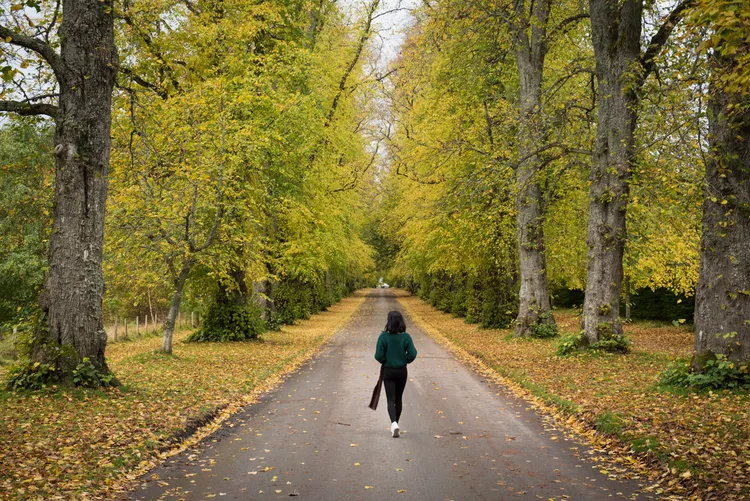
Going outside and getting fresh air is a reliable way to feel even a little better. "Put on your shoes and walk, preferably outdoors," Dr Torres suggests. "The key is rhythmic, steady movement. As you walk, turn off or pocket your phone and practise mindful observation for at least 10 minutes. Notice the colours, the sounds, and the feeling of your feet on the ground. Pay attention to how your body moves and how your breath responds."
For added intentionality, take note of changing leaves, dogs on their evening stroll, or even a friendly face that smiles back at you.
3. The Butterfly Hug
This practice feels like a hug from the inside out. "Cross your arms over your chest, with the middle fingertip of each hand placed roughly below the opposite collarbone," Dr Torres suggests. "You can let your other fingers fan out, and you can interlock your thumbs to form the 'body' of the butterfly."
Once in position, close your eyes, lower your gaze, and take slow, deep breaths. "Gently begin to alternate tapping your hands, left-right, left-right, like the slow flapping of a butterfly's wings. Keep the rhythm even and soothing. Continue for 1 to 3 minutes, or until you feel calmer."
4. Shaking It Out
Stress lives in the body, and sometimes you need to physically release it. "Set a timer for five to ten minutes and literally shake out your arms, legs, shoulders in whatever way feels right," says Kristin Anderson, LCSW, licensed psychotherapist and founder of Madison Square Therapy. "You can dance around, jump up and down, or stretch out your body. It might feel silly, but this kind of movement helps your nervous system discharge the excess energy held in the body when stressed. It can help bring you down from a fight-or-flight state more effectively than sitting still."
5. Shifting the Story
Beyond physicality, a mental shift is essential for destressing. "A big part of stress comes from the narrative we're stuck in," Anderson says. "Spend 10 minutes identifying what you're telling yourself. Maybe it sounds like 'I'm failing,' or 'no one shows up for me,' or 'I'm never going to catch up.' Once you've got the core narrative, ask yourself: 'What else could be true?'"
This reframe allows you to loosen the grip of a story that's making your nervous system work overtime. Maybe that means giving yourself credit for something you did that week, a moment when you felt strong, or a simple reminder that nothing is permanent.
6. Safe Place Guided Imagery
If we have to live inside our minds, we might as well make it a nice place to be. Dr Torres suggests "a guided visualisation technique where you create a vivid mental image of a place where you feel completely calm, safe, and secure. You can mentally retreat to this place anytime you feel overwhelmed or distressed. This can be a real place you've visited, a memory, or an entirely imaginary setting."
By engaging your senses — noticing what you see, hear, smell, touch, and taste — you can ground yourself in a more pleasant experience than the one you're having right now.
Quick reference guide
Habit | ime needed | How it helps |
Progressive muscle relaxation | 5–10 mins | Releases physical tension, grounds you |
10-min nature walk | 10 mins | Rhythmic movement + mindful observation |
Butterfly hug | 1–3 mins | Calms nervous system, self-soothing |
Shaking it out | 5–10 mins | Discharges excess stress energy |
Shifting the story | 10 mins | Reframes negative mental narratives |
Safe place imagery | 5–10 mins | Creates a mental retreat for calm |
The bottom line: Stress is inevitable, but how you respond to it makes all the difference. These six simple habits can help you shift from fight-or-flight to rest-and-digest in just 10 minutes — anywhere, anytime. Choose the one that feels right for you, and make it part of your daily routine.
 Watch AD
Advertisement
Advertisement
Advertisement


